By Find My Sexy · June 17, 2026 · 5 min read
Sex Used to Be Fun. Now It Feels Serious.
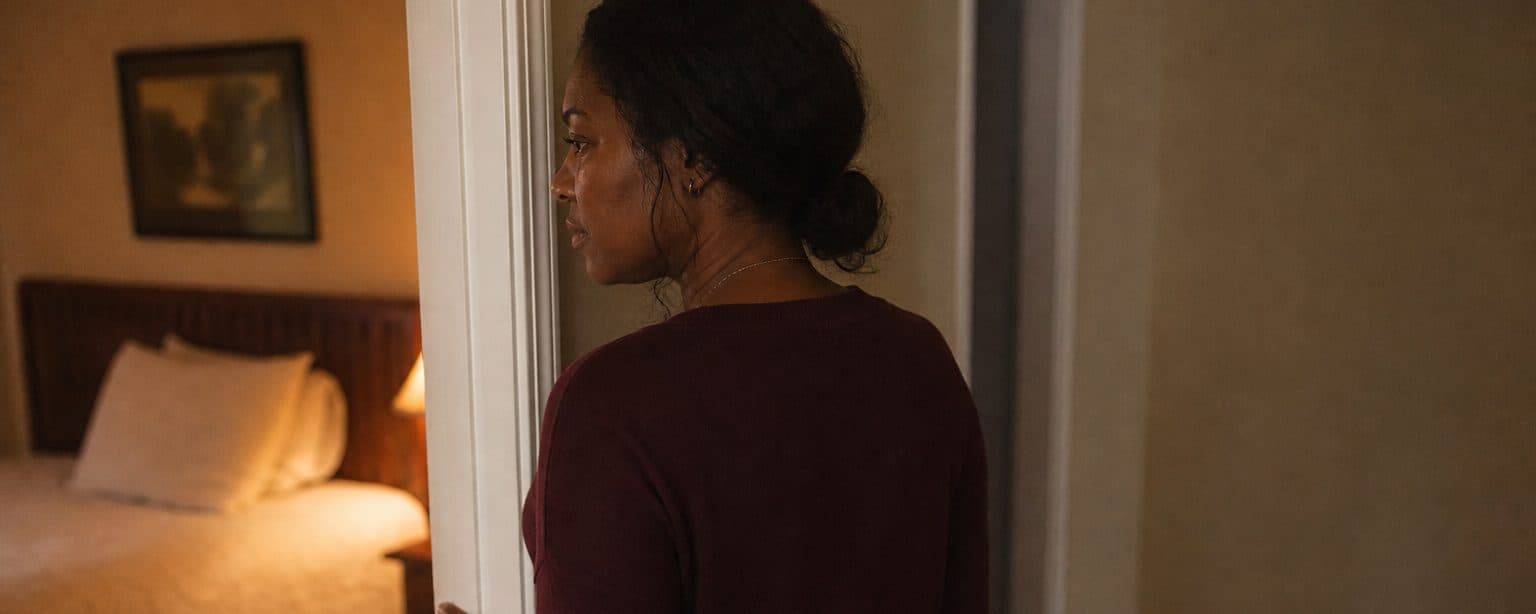
You remember when something could go wrong, an elbow in the wrong place or the two of you knocking heads in the dark, and it was funny instead of ruining it. That ease has gone somewhere. Sex is still happening. But it feels like something that needs to go well.
The lightness didn't leave because the relationship got worse. It left because the stakes got higher.
When sex was new, nothing was riding on it. If it went badly, that was just how it went. It didn't say anything about who you were or whether the whole thing was going to work. It was just a thing happening, without a verdict attached.
Years in, that changes. Every encounter now arrives with a history: the times something felt off, the specific ways it hasn't quite been what either of you wanted. It carries the question of whether you both still want each other. It carries whatever has been sitting between you that hasn't been named yet. That's a lot to ask a bedroom to hold.
And when things matter, the body goes careful. Careful and playful don't share a room easily.
What got in the door
Several things accumulate in a long relationship, and each one lands on the brakes.
Performance pressure is one. Early on, there's no track record. Later, there is. The track record includes your own sense of what good looks like, and every encounter now carries that quietly in the room. Whether you're measuring up. Whether it's as good as it used to be.
Emily Nagoski's research is useful here: desire has an accelerator and a set of brakes. Erotic signals press the accelerator. Anything the body reads as a test, or a reason to be careful, hits the brakes. A performance environment is a reason to be careful.
Then there's what researchers call spectatoring: watching yourself from the outside instead of feeling what's happening. Masters and Johnson documented it decades ago. It's still one of the most consistent findings in research on women's sexual experience. When you're noticing how you look, or whether you're taking too long, you've stepped out of the experience. You're in the audience of your own sex life. Audience members don't feel very much.
And then there's the emotional accounting. The running ledger of how things have been between you, what's gone unsaid, who's been carrying what. That ledger doesn't wait outside the bedroom. Sex that lands on top of unacknowledged distance tends to feel less like play and more like a verdict.
None of this is a character failure. It's what happens to a thing that matters, over time, in a real relationship.
One path back
The thing that actually works is removing the destination.
Sex therapy has a practice for this, sometimes called sensate focus: touch that explicitly has nowhere to go. The agreement before is that nothing will escalate. No intercourse, no orgasm as the goal, no arriving anywhere. Just contact. Just noticing what feels warm or interesting or good, without expecting it to add up to something.
This is not a technique for having more sex. It's a technique for getting the stakes out of the room.
What often happens when the stakes leave is that laughter comes back. Not because anything is funny, but because when there's no pressure, bodies relax. And relaxed bodies are a bit ridiculous. They make noises. They don't cooperate. Instead of that being a problem, it kind of becomes the point.
So the suggestion is specific: agree in advance that nothing more will happen. Spend twenty minutes in contact, with nothing required of either of you. Let it be boring or strange or unexpectedly nice. Do this a few times before anything else changes. The stakes will try to creep back in. But they're easier to push back when you've already named them out loud.
Playfulness doesn't come back because you decide to be playful. It comes back when the room is light enough to let it in.
Free
Get the 5-minute starter practice
One email, right now, with a practice you can do today. Plus occasional posts on this work. No spam, unsubscribe anytime.
Get the long-form essays by email: findmysexy.substack.com
Or, if you’re ready, Find My Sexy is the full 365-day daily practice — for women in their 40s coming back to themselves.
Start my practice — €97/year →