By Find My Sexy · June 3, 2026 · 7 min read
Why Am I Not Sexual Anymore?
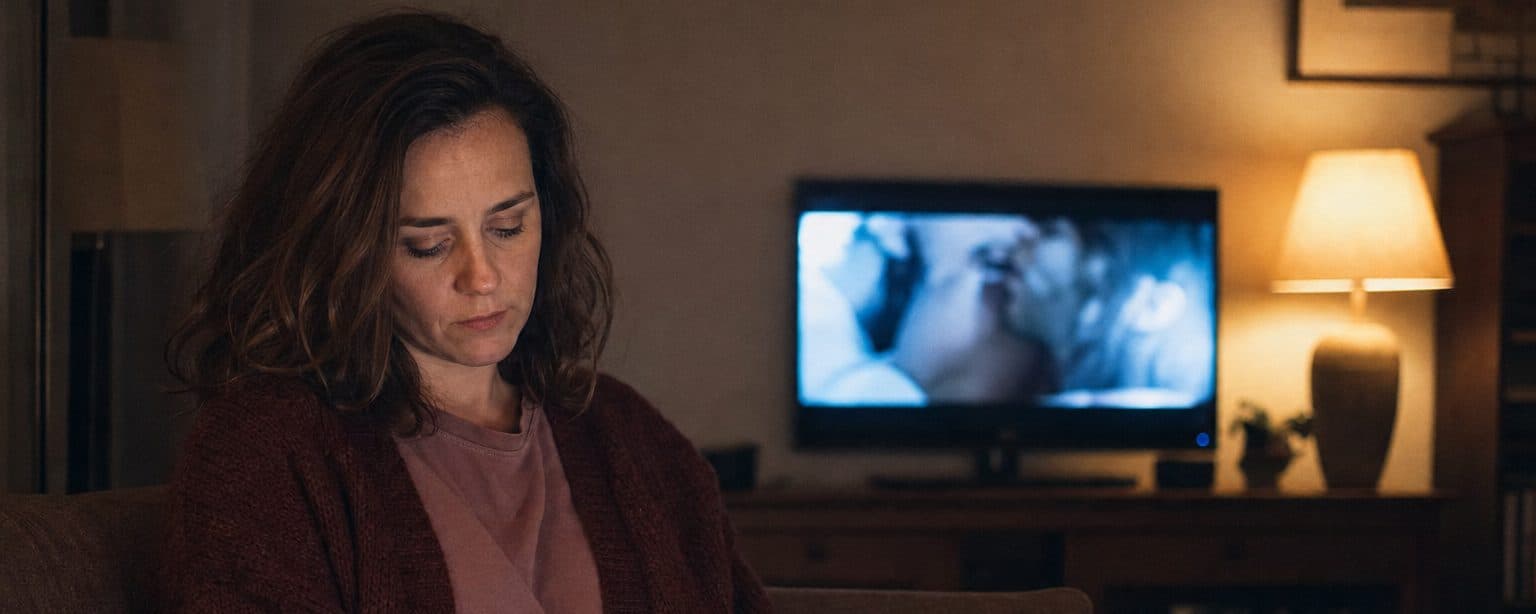
You're watching a film and something erotic happens onscreen. Instead of feeling anything, you find yourself thinking about whether you locked the car. You catch yourself looking at an attractive person and notice the thought "I suppose that's attractive" the way you'd notice the weather is cold. Correct. Completely uninteresting to your body.
You wonder, quietly, whether you've stopped being sexual. Whether something closed that used to be open. Whether this is who you are now.
The question underneath that one is almost never about behavior. It's about identity. And the identity piece is different from what most women think.
What "not sexual" usually means
When women in their 40s describe not being sexual anymore, they're usually describing a loss of contact with a particular part of themselves. The version who noticed things. Who had preferences. Who could be moved by a scene in a book, a specific kind of touch, a moment of unexpected beauty.
That self doesn't disappear. But it can go very quiet under the right conditions.
And the conditions in this decade are unusually effective at quieting it. Years of caretaking, of sex happening more out of obligation than desire, of directing all attention outward from morning to night. These bury the erotic self under other priorities until it somehow stops showing up uninvited.
The brakes problem
Emily Nagoski's research describes sexual desire as a system with two sides: brakes and accelerators. Everyone has both. The brakes suppress desire when the conditions feel wrong. The accelerators generate it when the conditions feel right. Both are always running.
The mistake women make when they feel "not sexual" is assuming the accelerator has failed. Nothing's turning them on. The accelerator must be broken.
Usually the accelerator is fine. The brakes are fully on.
Years of obligation sex teach the body that sex is something to get through. The nervous system is extraordinarily good at learning from patterns.
When sex is repeatedly paired with the feeling of having to perform, the body starts to protect itself before anything begins. The brakes engage early. They become the default.
Exhaustion and mental overload do the same thing through a different route. Responsive desire (the kind that follows warmth and context rather than preceding it) can't gain traction when the body is already full. There's no room in a system running on fumes for desire to surface.
So the identity of "person managing everything" gradually displaces the identity of "person who wants things." Not by choice. By sheer weight of repetition and load.
The erotic self isn't the same as sexual behavior
There's a version of you that exists independent of any partner, independent of any act. The version that has aesthetic preferences. What kind of beauty moves you. What fiction pulls you in. What textures and sounds you return to.
This is the erotic self. It's about aliveness. Noticing. Being someone who is moved by things.
When that self goes quiet, desire has nowhere to start. You can't rebuild wanting in a relationship when the interior capacity for wanting has been starved of attention for years.
Wanting doesn't arrive from the outside and travel in. It starts from inside and moves outward. When the inside is quiet, the outside cues land flat.
Interoception, the body's ability to sense its own interior, is the same system that registers desire, aesthetic response, and pleasure. It goes quiet under sustained overload. And it comes back the same way: slowly, through paying attention to small things.
So the work isn't a better sex life. The work is reintroducing yourself to yourself first.
Where it comes back
It starts with noticing. Through deliberate, low-pressure attention to small sensory things, in the same direction it went quiet.
The useful question is "what do I actually notice, when I slow down enough to notice anything at all."
This sounds like a detour. It's the direct route. The woman who has lost contact with her erotic self has usually also lost contact with her preferences in general.
What she finds beautiful. What she savors versus what she endures. What she actually enjoys in a day, separate from what she does. The noticing is the actual work.
One thing
A question, returned to each day for a week: what is one thing today that you find beautiful?
Something aesthetically. A piece of writing. Light through a window. The way someone laughs. A sound that does something in your chest. Anything that makes your attention pause. You don't have to tell anyone. You just have to notice it.
That's it. The question creates a small interior habit: checking in with what you find beautiful, separate from what anyone else needs. It's a very small act of self-contact. But it's the same channel. The same system that will eventually register desire again, if it's given attention.
The erotic self comes back through practice of noticing. Attention is what it runs on. It finds its way back in small increments. A song that does something. A book that pulls you somewhere unexpected. The way a particular kind of light lands on something and you stop for a moment to really look.
What this is about
The erotic self is yours, independent of any partner. Whether you eventually want more sex with your husband is a separate question from whether you're someone who can feel desire at all. This piece is about that second question, the interior one.
And the answer, if you look carefully, is probably still yes.
If what's closest to the surface right now is grief, missing the version of you that wanted things easily, there's something on that at I've lost my spark.
Free
Get the 5-minute starter practice
One email, right now, with a practice you can do today. Plus occasional posts on this work. No spam, unsubscribe anytime.
Get the long-form essays by email: findmysexy.substack.com
Or, if you’re ready, Find My Sexy is the full 365-day daily practice — for women in their 40s coming back to themselves.
Start my practice — €97/year →